

Guides · Safety
Why a snapped spring is a stand-clear job
Somewhere in Raymond Terrace this week, a garage will go off like a gunshot and a door that worked yesterday won't lift an inch. Here's what actually happened, why the door is suddenly so heavy, and the two things not to do next.
The spring holds the weight. The opener only moves it.
A double garage door is a genuinely heavy object, and yet a healthy one can be lifted with two fingers. The trick is the counterbalance: a steel spring, wound under tension on a shaft above the door (a torsion spring), or stretched along the tracks on older doors (extension springs). The spring stores almost exactly the door's weight, so the door floats. The opener, for all its noise, only steers a load the spring is already carrying.
That's the single most useful fact about garage doors, because it explains the whole failure. When the spring parts, nothing is carrying the weight any more. The door doesn't become broken so much as it becomes honest: you're now dealing with its full, real weight, and nothing in the system was designed for that.
The bang, decoded
Steel springs are rated in cycles, one open-and-close at a time; a common residential rating is in the order of ten thousand cycles. A family door working four times a day spends that in roughly seven to ten years. When the last cycle is spent, the spring parts, and the stored tension in a torsion spring releases in a fraction of a second: that's the bang, often loud enough to be heard from inside the house and usually mistaken for something hitting the roof.
On a torsion setup the parted spring stays on its shaft, which is the system working as designed even in failure. On old extension-spring doors a parting spring can whip, which is why best practice runs a safety cable through each spring, and why we check for them on every older door we visit in the old grid.
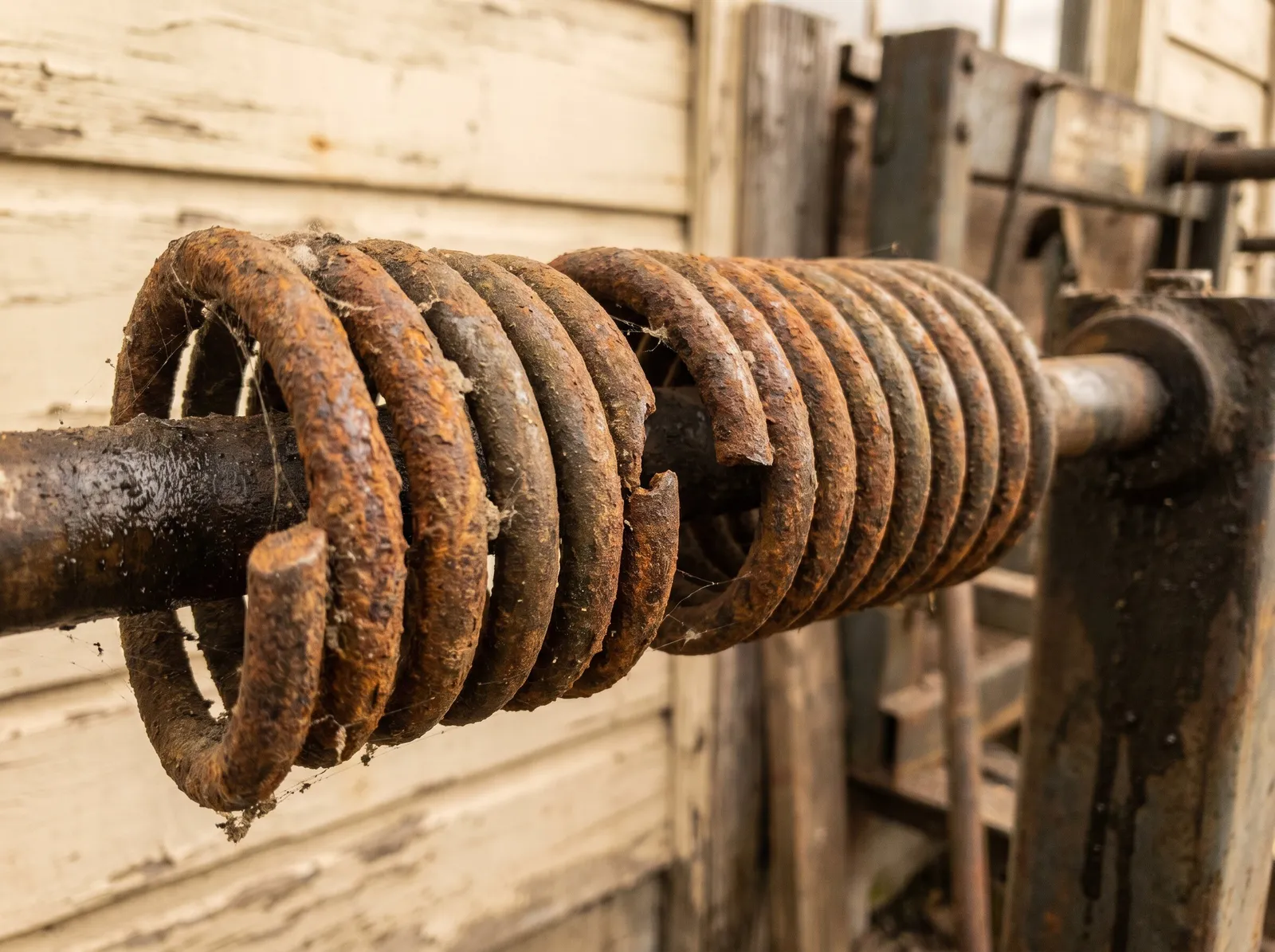
What it looks like from the kitchen
- A loud bang from the garage, then a door that won't lift, or lifts a few centimetres and gives up.
- The opener straining, clicking or reversing: it's trying to lift the full door weight and its safety settings won't let it.
- A visible gap in the spring above the door, like a coil with a bite out of it.
- On older doors: a door that suddenly sags on one side, if a single extension spring has gone.
The two things not to do
1. Don't lift it by hand
The door that floated last week now weighs everything it always weighed. People hurt their backs, wrists and worse trying to lift spring-dead doors, and a door lifted without a counterbalance can come back down without asking. If the car is trapped and there's a genuine emergency, that's a judgement call you make with the weight in mind and another adult on hand; if it can wait an hour, let it wait.
2. Don't pull the red cord to "fix" it
The manual release exists to disconnect the opener in a blackout, on a door whose spring still works. Pulling it on a spring-dead door doesn't free anything; it just removes the last thing holding the door in place and hands the full load to whoever is standing under it. Leave the door exactly where it stopped.
Why the repair itself is a bars-and-count job
Replacing a torsion spring means winding the new one to the door's measured weight with proper winding bars, a set number of quarter-turns at a time. It is methodical, unhurried work with real force in your hands at every step, which is exactly why it's the one garage door repair that should never be a weekend project. The winding bars are not improvisable; a screwdriver in a wind cone is how the emergency department meets garage doors.
A proper spring repair also checks the parts that took the shock: lift cables, the drums they wind onto, and the door's balance after the new wind. That's the difference between replacing a part and repairing the machine.
If it's just happened to you
Leave the door where it stopped, keep people and pets clear of the spring shaft and cables, and send us an enquiry with what you heard and what the door is doing. Say if the car is trapped; it changes how we read the urgency. A technician diagnoses it in person and the price is set at the door, before any work starts.
Sources worth knowing
- ACCC Product Safety: garage door openers: the national recall and safety-notice register; worth a search if your opener is old or second-hand.
- AS/NZS 60335.2.95: the Australian safety standard covering automatic residential door drives, including the auto-reverse behaviour that stops a closing door meeting an obstruction. We describe it here so you know it exists; compliance claims for a specific product belong to its maker.